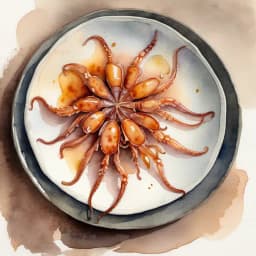
When you put freshly boiled firefly squid in your mouth, the plump texture of the flesh is followed by an explosion of bittersweet flavor from the viscera. Those caught in Toyama Bay during their spawning season have large, plump bodies and an especially rich liver flavor.
Measuring only 4 to 6 centimeters in length, the photophores located at the tips of their arms and on their bellies glow with a pale blue light, illuminating the spring night sea with a fantastical glow. The peak season is from around March to May. Toyama Bay is so deeply connected to these tiny squid that it has been designated as a National Special Natural Monument known as the 'Firefly Squid Mass Spawning Sea Surface.'
Enjoy them boiled with refreshing vinegar miso, or as 'okizuke' (marinated in soy sauce) for a luscious texture. Please savor the intense richness of the spring sea.
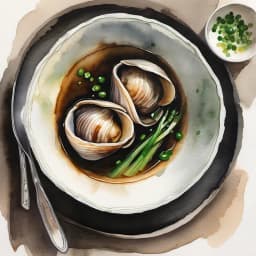
Taking a bite of the sweet and savory simmered dish, you experience a crunchy texture followed by an explosion of oceanic aroma and a subtle, sweet umami. Because it is simmered slowly in its shell, the flavorful juices soak deep into the meat, allowing you to savor every bit of the shellfish's essence.
Dogwhelks are sea snails that live in the deep waters of Toyama Bay. In Toyama, it is rare to find such a wide variety of species caught from the same sea, making them a familiar taste that has been part of the local dining table since ancient times. Smaller ones are perfect for sweet and savory simmering, while larger ones are best served as sashimi. When eaten as sashimi, a pleasant, crunchy texture accompanies an overflow of oceanic umami with every chew.
They pair perfectly with both hot sake and chilled beer. A true gift from Toyama Bay, ideal as an accompaniment to your favorite drink.
From spring to early summer in Toyama Bay, a phantom-like landscape appears over the sea—a mysterious natural phenomenon unique to Uozu City, which is renowned for its mirages.
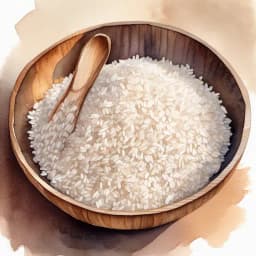
Uozu has been known as a famous spot for mirages since before the Edo period, and even today, many people visit to catch a glimpse of this illusory scenery. The local gourmet you must taste in Uozu is "Bai-meshi." This is a seasoned rice dish that fishermen catching whelks (bai-gai) used to eat as a quick meal during work. The savory umami of the whelk permeates every single grain of rice, resulting in a simple yet deeply flavorful dish.
After gazing at the mirage, enjoy some warm Bai-meshi at a seaside shop. It is a moment where you can fully savor the blessings of Uozu's sea and local life.
Biting into a freshly fried one, the crispy coating shatters satisfyingly to reveal fluffy potatoes inside—Takaoka Croquettes are a beloved local flavor enjoyed throughout the town.
The inspiration came from household expenditure statistics. Since croquette consumption in Toyama was among the highest in the country, in 2004, young employees of the Takaoka City Hall began a regional revitalization project under the slogan "Aim for Croquette Town!" In reality, there is no fixed recipe for "Takaoka Croquette"; rather, any croquette sold and eaten within the city is considered a true Takaoka Croquette.
Walking around and trying one from a butcher shop, then another from a deli—this free-spirited way of enjoying them suits the town perfectly.
A perfectly round, large croquette measuring about fourteen centimeters in diameter. This is the local specialty of Takaoka City, known as the 'Takaoka Daibutsu Croquette.' It was named after the Takaoka Daibutsu, which is counted as one of the three great Buddha statues in Japan, to emulate its impressive appearance.
Originally, Takaoka has been one of the leading 'croquette towns' in Japan in terms of consumption. However, feeling that the city lacked a signature specialty, local volunteers stepped up, and this large croquette was born in 2005. The name 'Daibutsu Croquette' is copyright-free, and it has since expanded to various shops throughout the city.
This large, crispy bite offers a truly satisfying eating experience. When walking through the streets of Takaoka, please try enjoying one while it is freshly fried. It is packed with the true spirit of the croquette town.
The rice is piled high in an arch shape, mimicking the dam's embankment. The curry roux is pooled along that curve like a lake, creating an uplifting visual experience—this is the Kurobe Dam Curry.
Its roots are said to trace back to the construction site of the Kurobe Dam, known for its incredibly difficult engineering; it served as a source of emotional comfort for the workers. After the dam's completion, it began being served as 'Arch Curry' at hotels and restaurants in Sengozawa, eventually evolving into modern versions with unique creative touches from various shops. The playful presentation, such as toppings shaped like sightseeing boats floating on the 'lake,' is part of its charm.
As you gradually break down the embankment with your spoon, it is a dish you'll want to savor alongside the magnificent scenery of Tateyama Kurobe.
With a single bite, the elegant fat melts across your palate, yet leaves a clean aftertaste that is never heavy. Kurobe Meisui Pork is a fine-grained brand pork raised in Toyama.
As its name suggests, the pigs are raised using mineral-rich underground water that flows from the Northern Alps to the Kurobe River alluvial fan. Furthermore, they are fed a unique feed mixed with bamboo vinegar, which results in a characteristic thick, robust red meat. Only pigs that meet strict meat quality standards can bear this name, and only a very small fraction of the total production is selected for shipment—a truly dedicated breed.
Whether enjoyed as tonkatsu or shabu-shabu, please savor the sweet fat nurtured by pure, clear waters.
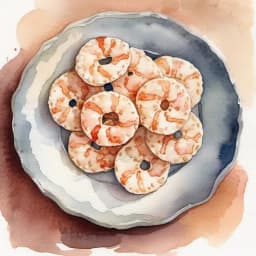
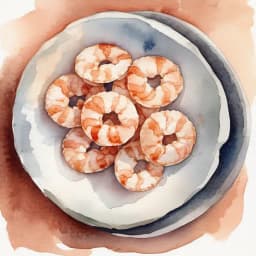
Small, translucent bodies of pale pink shimmer brilliantly on the plate. When picked up with chopsticks and brought to the mouth, they cling stickily to the tongue, eventually melting away as an elegant, deep sweetness gradually spreads—this is the 'Jewel of Toyama Bay,' the white shrimp.
With a body length of only 5 to 8 centimeters, they swarm in the deep submarine canyons of Toyama Bay. This bay is considered the only place in the country where they can be caught in large enough quantities to sustain a fishing industry. Because they lose freshness easily, sashimi made from peeled shrimp is a true local delicacy. When prepared as kakiage (tempura fritters), the batter becomes crispy and fragrant, releasing an abundance of sweet umami with every bite.
Meltingly tender as sashimi, or crispy as kakiage. Within each tiny shrimp, the sweetness of the sea is tightly packed.
When you take a bite, the flesh bounces with a plump texture, and the sweetness of the freshly caught sea spreads instantly through your mouth. A clear, untainted flavor that only high-quality fresh fish possesses—in Toyama, we call this 'Kito-kito'.
'Kito-kito' is a Toyama word expressing the lively, splashing state of being freshly caught. The deep and rich Toyama Bay is a treasure trove of the sea, yielding seasonal delicacies one after another, such as winter yellowtail, whelk, white shrimp, and firefly squid. Because the fishing grounds and ports are close together, we pride ourselves on freshness, bringing seafood to the table on the very same day it is landed.
It is excellent as sashimi, wonderful simmered, and delicious grilled. Please enjoy the extraordinary freshness of Toyama Bay's 'Kito-kito' exactly as it is.
After a plump, bouncy texture, the gentle sweetness of the fish paste spreads softly through the mouth. Shinminato kamaboko is smooth and rich in umami, carefully made by grinding fish from Toyama Bay.
The decorative 'saiku' kamaboko, shaped like colorful sea bream, cranes, and turtles, is an essential auspicious item for weddings in Toyama. Artisans hand-shape them and color them in red and white. The sea bream (tai), a pun on the word 'medetai' (auspicious), is considered even more celebratory when larger, adding splendor to festive occasions. The warm custom of slicing and sharing the kamaboko with everyone who receives it still survives today.
Simply slice it and enjoy with wasabi soy sauce. Each bite brings a burst of happiness; it is a pride of Toyama that allows you to taste the very spirit of celebration.
As the name suggests, the soup filling the bowl is pure white. As you slurp, the mellow umami of pork bone is accompanied by a gentle aroma of ginger. The noodles, which have egg kneaded into them, are chewy and elastic, clinging perfectly to the white soup.
It was created in 2012. This local ramen was conceived by the Young Men's Division of the Oyabe Chamber of Commerce and Industry as part of a town revitalization project. The rule is that the dish must feature white pork bone soup topped with ginger-flavored meat miso, using at least one ingredient produced in Oyabe. The toppings, such as local eggs and Marchen Pork chashu, offer a flavor unique to the region.
As you dissolve the meat miso into the white soup, the umami deepens with every stir.
Carefully nurtured in Oyabe, the 'Town of Marchen,' this is our prideful brand of rice: 'Marchen Rice.'
Oyabe City spreads across the Tonami Plain, created by the Sho River and the Oyabe River. The area is known for its 'Sankyo-mura' landscape, where houses are scattered among groves of trees, and its fertile soil produces high-quality rice. Centered around Koshihikari, Marchen Rice is a premium product grown with a strict commitment to soil preparation and environmental care. Its lovely name, inspired by the town lined with buildings that look like they belong in a fairy tale, is also unforgettable.
When cooked, the grains are glossy, plump, and sweet. Please enjoy this rice, grown with heartfelt sincerity in the Town of Marchen.
Grown in Kamiichi Town at the foot of the Northern Alps, these taro roots have a rich, sticky texture. When used in simmered dishes, their natural flavors are greatly enhanced.
Production of Kamiichi taro began during the Showa era. It took root as a crop to utilize rice paddies after the rice harvest, and has been carefully cultivated in land blessed with soil that provides both good drainage and moisture retention. Renowned for its soft, sticky texture and subtle sweetness, it is highly regarded in the market. Today, it has become one of the town's representative specialty products.
Fluffy and chewy. When prepared in miso soup or simmered in soy sauce (nikkorogashi), its simple deliciousness makes you want to eat more rice. It is an indispensable flavor of autumn and winter on the tables of Kamiichi.
Walleye pollock raised in the rough waves of the Sea of Japan, cut into large chunks and boldly simmered in a miso base—this is the traditional fisherman's dish 'Tara-jiru' passed down in Asahi Town.
It uses walleye pollock. The flesh is light and gentle, while the liver provides a rich, deep flavor. It is said that this dish was born from the coastal lifestyle, where wives would welcome their husbands with piping hot soup upon their return from fishing. Along National Route 8, restaurants serving Tara-jiru line the streets, earning it the name 'Tara-jiru Highway' and making it a winter specialty. The ability to enjoy it while gazing out at the sea is also part of its charm.
This miso soup, made using whole walleye pollock, warms you to the very core. It is a coastal delicacy of the Sea of Japan that you truly want to taste during the cold season.
In Hirudani, Asahi Town, there is a tradition of handmade washi paper that has been passed down for 400 years.
It is said that the origin of Hirudani Washi began when people migrated from Hirudani in Shiga and started making paper in this area, naming the new land after their hometown. By preserving ancient techniques such as processing kozo (mulberry) with cold water during the harsh winter, the paper is characterized by a texture that is both durable and soft. Along with Yao Washi and Gokayama Washi, it is known as 'Etchu Washi' and has been designated as a National Traditional Craft.
Even today, the craftsmanship of the artisans who continue to make this paper is attracting global attention. It is a proud paper culture of Toyama, living on in the worlds of calligraphy and traditional crafts.
In the spring, the Tonami Plain is covered with colorful flowers as far as the eye can see—. Toyama Prefecture is a well-known 'Tulip Kingdom,' boasting the highest volume of tulip bulb shipments in Japan.
Cultivation began in 1918 when Toyozo Mizuno of Tonami purchased bulbs and began growing them as an after-crop in rice paddies in this snow-heavy region. Since then, these flowers have taken firm root, and the 'Tonami Tulip Fair,' held annually from late April to early May, has grown into one of Japan's largest floral festivals, featuring approximately three million blooming flowers. With a vast variety of colors and shapes, simply walking through them is a delight for the heart.
If you visit Toyama in the spring, be sure to visit the tulip fields. A breathtaking landscape and the soft scent of flowers await you.
With a single sip, you experience a smooth glide down the throat followed by a firm, satisfying elasticity. Despite being thin, they do not break easily, and the sweetness of the wheat seeps out with every chew—that resilient texture is the hallmark of Daimon Somen.
Its unique appearance, rolled into a shape resembling a traditional topknot (mage), is also eye-catching. During the coldest time of the year, the dough is kneaded repeatedly using the underground waters of the Shogawa River in Tonami and finished by exposing it to the cold winds blowing down from Mount Hashifuse—this painstaking process creates the smooth mouthfeel and firmness. Originating around the end of the Edo period, it has been carefully passed down as a winter handicraft for farming families.
Serve freshly boiled noodles, chilled tightly in cold water, and dipped in tsuyu sauce. When served in a bowl with floating ice, it looks refreshingly cool. It is a summer delicacy nurtured by a cold climate.
With a single bite, the dense flavor of soybeans rushes into your mouth. Much richer than ordinary tofu, its thick, sweet bean essence lingers with every chew—this is the true taste of the firm tofu preserved by this mountain village.
Gokayama Tofu is characterized by its firmness, said to be so solid that it can be carried tied with rope. In the Gassho-zukuri village, a World Heritage site, it is crafted with great care using soybeans from Toyama Prefecture and pure underground spring water, without the use of any foaming agents. Because of its hardness, the umami of the soybean is highly concentrated, and it holds its shape even when simmered for long periods.
Try slicing it thick and pan-frying it like a steak with just a drop of soy sauce, or use it in stews where it absorbs flavors deeply. This is a powerful block of tofu that will change your very concept of what tofu can be.
A highly aromatic soba noodle produced in the mountains of Gokayama. This is a prideful flavor unique to Nanto, nurtured by the cool climate and pure water.
Since ancient times, Toga Village in Nanto City has been known as a major producer of soba. In this land, where there are large temperature fluctuations between morning and night, buckwheat grows with a rich flavor and firm texture. Throughout the mountain villages, there are renowned shops that do not spare any effort—grinding brown buckwheat, including the native Gokayama varieties, using stone mills and finishing them by hand. This taste can be described as the crystallization of village wisdom, turning the harsh nature to its advantage.
With a smooth texture and an aroma that drifts through the nose, a bowl chilled sharply with cold mountain water leaves a lasting impression on every visitor.
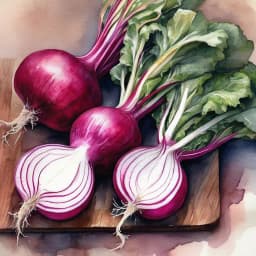
A vibrant reddish-purple turnip grown in the World Heritage site of Gokayama. This is the traditional vegetable known as 'Gokayama Red Turnip.'
Since ancient times, native varieties of turnips have been passed down in Gokayama, with each farmer continuing to collect and preserve their own seeds. This is why slight variations in color and shape between farms are part of what makes these red turnips so authentic. The wisdom of the people living in this snowy region was to harvest them before the harsh winters of this heavy snowfall area arrive and preserve them by pickling them in vinegar. The significant temperature fluctuations between day and night develop a firm texture and a pleasant sweetness.
With its sharp acidity, natural sweetness, and visually beautiful red color, it is a bite of culture that embodies the very essence of life in a deep-snow mountain village.
When the knife cuts through, the massive, rugby ball-shaped body provides a heavy, satisfying resistance before splitting to reveal a juicy red interior. A single bite reveals a unique texture that is more crisp than crunchy. An overflowing amount of juice accompanies a refreshing, elegant sweetness that spreads throughout your mouth.
Measuring approximately 40 cm in length and weighing between 15–18 kg, this watermelon boasts the largest size in Japan. It is grown on the well-drained Kurobe River alluvial fan. Using non-grafted, self-rooted cultivation, it brings out the true, original flavor of the watermelon. With a high sugar content of around 12.5–13 degrees, its pride lies in being intensely sweet despite its massive size.
Chill it, then take a large bite. It is a luxurious sweetness nurtured by Nyuzen in the summer.
Pure deep sea water pumped up from the depths of Toyama Bay. Nyuzen Town is known as a town that utilizes this blessing in daily life.
Deep sea water refers to water found at depths greater than 300 meters, characterized by low temperatures, high purity, and rich content of minerals and nutrients. In Nyuzen Town, water is extracted from the deep sea offshore and used in various ways, including drinking water, food processing, aquaculture, and beauty products. The town walks alongside the sea, advancing initiatives unique to deep sea water, such as abalone aquaculture.
This mellow, clean-tasting deep sea water is truly a treasure of the ocean—a blessing unique to Nyuzen, quietly nurtured by Toyama Bay over long periods of time.
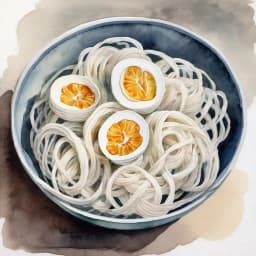
When you slurp a single strand, you are met with a chewy elasticity that is hard to imagine from its slender appearance. Himi Udon is made using a hand-stretching technique where the noodles are repeatedly stretched thin by hand without the use of oil. Because of this, despite being thin, they possess a strong bite and a smooth texture that combines a flavor reminiscent of freshly pounded mochi with an effortless swallow.
Its origins date back to the mid-Edo period. In 1751, Takaoka-ya in Himi began producing these thread-like noodles by adopting hand-stretching techniques, and it is said they were even presented as tribute to the lords of the Kaga Clan.
When chilled, the texture becomes crisp and firm. When dipped in warm broth, the strands unravel smoothly. It is a pride of Himi that shows two different faces in a single bowl.
When you pierce it with your chopsticks, the fat oozes from the moist flesh. The moment it touches your mouth, a melting sweetness spreads across your tongue—this is the 'Himi Kanburi,' the king of Toyama Bay in winter.
Toyama Bay lies along the migration route of yellowtail, and its deep seafloor topography attracts the fattest winter fish. One of our prides is that they are landed with peak freshness because the distance from the fishing grounds to Himi Port is so short. Only first-class specimens that meet strict standards for weight, shape, and quality can bear the name 'Himi Kanburi.'
It is wonderful as sashimi, excellent as shabu-shabu, and delicious as teriyaki. Please enjoy a slice of this winter bounty at its peak fattiness.
When grilled over a net, a savory aroma gently rises. The skin is crispy, and the flesh is plump. As you flake it with chopsticks, steam rises, and with every bite, the concentrated umami of the fish slowly seeps out.
These are overnight-dried (ichiyaboshi) or mirin-marinated dried fish, made by slowly drying fresh, 'kito-kito' (vibrant/fresh) fish caught in Himi, Toyama Bay, with a light touch of salt. Because the freshly caught fish is processed immediately, it retains a concentrated deliciousness that is different from raw flesh. In particular, Himi's Japanese sardine is a local specialty so famous it is even mentioned in dictionaries.
Place it atop white rice and let it crumble softly. It is also perfect as an accompaniment to evening drinks. Simply by applying heat, this delightful dish brings the bounties of Toyama Bay right to your dining table.
When placed on the tongue, the fine marbling melts away instantly, leaving behind only the pure, clear umami of the meat itself. While the fat is juicy, the aftertaste is refreshing, naturally making you reach for another piece, and then another.
Himi Beef is Japanese Black Wagyu raised freely in lush green villages, drinking pristine mountain spring water. It boasts a beautiful balance of lean meat and fat, with an assured quality where over 85% of the beef reaches A4 rank or higher.
Sizzling on a grill amidst fragrant steam; lightly dipped in shabu-shabu; or cooked in a sweet and savory sukiyaki. It is an exquisite dish, carefully nurtured in Toyama, offering a flavor that is both elegant and rich.
When you open the lid of the round wooden box, the fresh scent of bamboo leaves wafts out. The beauty of Toyama's Masu-zushi lies in its exquisite layers: the moist, firm flesh of cherry trout packed tightly together with perfectly seasoned vinegared rice.
Originally, it was an ancient preserved food made by curing trout caught in clear streams with vinegar and pressing it. It is said that the prototype of today's Masu-zushi originated when a retainer of the Toyama Clan presented sushi to Shogun Tokugawa Yoshimune during the Kyoho era. Since the Meiji era, it has become known nationwide as an ekiben (station bento) and has become a representative flavor of Toyama. Artisans fillet the trout every day, adjusting the amount of salt to suit the daily catch and the climate.
With each slice, as you peel away the bamboo leaf, you can feel the history of the land residing in every single piece pressed by hand.
The melt-in-your-mouth sweet flesh dissolves beautifully on the tongue. With its translucent, pale pink appearance immediately after being caught, white shrimp are known as the "Jewel of Toyama Bay."
Measuring only 5 to 8 centimeters in length, they swarm in the deep submarine canyons of Toyama Bay; this bay is believed to be the only place in the country where they can be caught in large enough quantities for commercial fishing. Because they have a short lifespan of only 2 to 3 years and produce few eggs, they are an even more precious existence. Part of their charm lies in their ephemeral nature—their color shifts to a milky white by the time the boats return to port.
Try them raw as sashimi or sushi, or enjoy them deep-fried for a fragrant crunch. Please savor the concentrated, intense umami captured within each tiny shrimp.
When you peer into the bowl, the soup is strikingly pitch black. With one sip, the intense saltiness of the dark soy sauce hits you hard—Toyama Black is a 'side-dish style ramen' that pairs perfectly with white rice.
Its roots are said to date back to around 1947, during the post-war Showa era. It is believed that 'Daiki,' which started as a food stall, created this dish for manual laborers working hard to rebuild after the Toyama air raids by serving ramen with an extra-concentrated soy sauce soup. It was designed to replenish lost salt, and the thick noodles provided lasting satiety. It was a meal for workers, meant to be eaten alongside rice.
Please try it with white rice. The contrast with the intense flavor reflects the strength of Toyama that supported its reconstruction.
On spring nights, when the fixed nets are pulled up, the sea surface glows blue-white all at once. Adorned with countless light organs on their bodies and arms, firefly squid are mysterious messengers announcing the arrival of spring to Toyama Bay.
These are small squid, measuring only 4 to 7 centimeters in length. They rush toward the coast for spawning between March and May, and are said to be larger than those caught in other sea areas. The waters from Toyama City to Uozu are so significant that they have been designated as a Special Natural Monument of Japan, known as the 'Firefly Squid Swarming Sea.' In Namerikawa, sightseeing boats operate, allowing visitors to observe the fishing up close.
Quickly boiled with vinegar miso, or enjoyed as okizuke. The rich, creamy umami of the liver brings the arrival of spring.
When sliced, the cross-section reveals a spiral pattern. A major feature of Toyama's kamaboko is that it has no wooden board; instead, the surimi (fish paste) is rolled up and then steamed.
The background of how this 'roll' was created lies with the Kitamaebune shipping route. During the Edo period, Toyama served as a transit point where large quantities of kelp from Hokkaido were brought in. It is said that this led to the idea of wrapping the easily accessible kelp around the surimi instead of using a board. This technique allowed the umami of the kelp to soak in while making the appearance more beautiful. 'Iromaki' (colored rolls), which incorporate red and blue surimi, and 'Saiku Kamaboko' (decorative kamaboko) shaped like sea bream, cranes, or turtles, are still cherished as wedding favors today.
Slice it thinly and enjoy a single piece just as it is. It is an auspicious flavor that embodies the wisdom of the local land.
Thin, transparent ice stretching across a rice field in early spring—the 'Usurai' (thin ice) is a famous confection from Toyama that captures this fleeting scene in sweet form.
Usurai Honpo Goromaruya was founded in the second year of the Horeki era (1752). The process involves rolling out Toyama-grown Shin-Taisho glutinous rice into an extremely thin layer and meticulously applying layers of Awa Wasanbon sugar with a brush. Its elegant flavor has long been renowned, having been presented to the Shogunate by the lords of the Kaga Domain, and since the Meiji era, it holds the prestigious history of being a purveyor to the Imperial Household Agency. This delicate sweet is crafted by hand over the course of two days.
Upon entering your mouth, it melts away smoothly. It is a pride of Toyama—a dry confection that captures even the ephemeral nature of the cold early spring air.
When you open the bag, the sweet aroma of butter gently rises. With a single bite, it crumbles lightly and crispily, allowing a savory sweetness to spread throughout your mouth.
The shape is modeled after the Takaoka Great Buddha, the pride of Takaoka. Counted as one of the 'Three Great Buddhas of Japan' alongside Nara and Kamakura, this Buddha is long loved by locals and is even called 'Japan's most handsome man' due to its elegant appearance. Its gentle face, symbolizing the copperware-making town of Takaoka, smiles softly atop the golden-brown sablé.
Perfect as a small gift to enjoy with warm tea. It is a Takaoka confection that offers double the fun: first to admire, then to eat.
When you put it in your mouth, it crumbles lightly and melts away. A single square piece of pale cream color, made from egg and sugar, quietly dissolves—this is the famous confection of Toyama, Tsukisekai.
Created by Tsukisekai Honpo, since its founding in 1897, the company has continued to uphold a traditional manufacturing method: combining fresh chicken eggs with Wasanbon sugar, Shirosan sugar, and agar, then slowly drying them along with concentrated syrup. Its hallmark is a light texture and an elegant sweetness that vanishes instantly. It is said that the name was given because it resembles the faint moonlight floating in the dawn sky.
A flavor that pairs beautifully with both Japanese tea and black coffee. A beloved Toyama souvenir that has been cherished across generations.
When you bite into the soft, round dough, smooth custard cream flows from within. Kankintan is a famous confectionery from Toyama, a moist and gentle steamed treat.
It is produced by Rebrand, a Western-style confectionery shop in Toyama. They take pride in their finely textured dough made with a unique method and their carefully cooked custard cream. The name was inspired by 'Hankontan,' a medicinal salve that Toyama is proud of. It shares its name with the famous medicine said to have spread across the country after being used by Masaoki Maeda, the Lord of the Toyama Clan, during the Genroku era.
With just one bite, the soft dough and sweet cream melt together into one. It is the perfect accompaniment to a cup of tea.
The Tateyama Kurobe Alpine Route is one of the world's leading mountain sightseeing routes, piercing through the 3,000-meter-class Northern Alps.
In this world above the clouds, you can encounter souvenirs found only here. Sweets and goods featuring motifs of the majestic nature—such as the ptarmigan, Kurobe Dam, and the 'Yuki-no-Otani' (Snow Wall) that appears only in spring—are lined up in the shops at Murodo and Daikanbo. In particular, goods featuring the ptarmigan, which has long been regarded as a 'messenger of the gods,' are especially popular among travelers. With many limited-edition items available only high in the mountains, it is easy to get lost in the selection.
An item chosen alongside breathtaking scenery will become an unforgettable memento of your journey. Please take home your memories of the 2,400-meter altitude.
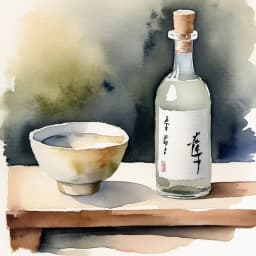
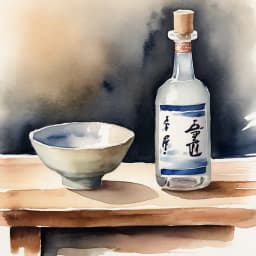
The local sake brewed with great care by the only brewery in Uozu is 'Hokuyo'. Using subsoil water from the Northern Alps and carefully selected sake rice, it is crafted to have a crisp flavor characteristic of a seaside town.
Honjo Shuzo was founded in 1925. At that time, the Port of Uozu was a major hub bustling with fishing activities in the 'Hokuyo'—the North Pacific. Drawing inspiration from that vitality and prosperity, the brand name 'Hokuyo' was given to this fine sake. With a proven track record of winning multiple gold awards at the National New Sake Awards, it has been beloved locally for a long time.
When enjoyed alongside the fresh seafood caught in Uozu, you will surely feel an even deeper connection to the climate and culture of Toyama. It is a powerful yet clear cup, deeply rooted in this fishing town.
When poured into a glass, a gorgeous aroma reminiscent of banana gently wafts up. With a beautifully stretching acidity and a clean, crisp finish—Kachikoma is a famous Toyama sake known for being hard to find.
It is brewed by Kiyoto Sake Brewery, founded in 1906 in Takaoka City. It is said that the first generation founder, upon returning from the Russo-Japanese War, named it 'Kachikoma' (meaning 'victory') to commemorate Japan's victory. Because it is meticulously crafted by only a few artisans, production volume is extremely limited, leading it to be called a 'phantom sake.'
The Junmai sake, brewed using polished Gohyakumangoku rice, offers an elegant flavor with an expanding umami of the rice. If you happen to encounter it, please take your time to savor it.
With a single sip, a clear sensation glides across the tongue, leaving only a crisp, quiet aftertaste. It is easy to drink with a smooth finish—that is the hallmark of Ginban.
Ginban Sake Brewery has been brewing sake in Kurobe since 1910, overlooking the Kurobe Gorge of the Northern Alps. The brewing water is spring water from the Kurobe River alluvial fan, which has been selected as one of Japan's Top 100 Famous Waters. Adhering to the motto 'Rice and Water Come First,' they polish sake-brewing rice without compromise. This is a cup that offers a refined yet full-bodied mellow richness, unique to brewing with spring water.
Enjoy it chilled for a sharp taste, or slightly warmed (nurukan) to let the flavors spread. It is a clean, local sake that pairs beautifully with the fresh seasonal fish from Toyama Bay.
Located in the town of Yatsuo, famous for the 'Etchu Owara Kaze-no-Bon' festival, Tamahasu Sake Brewery is an established brewery that has been brewing sake for over two hundred years.
Founded around 1808 during the Bunka era, they carefully craft each bottle by hand using only soft water nurtured by the snowmelt from the Tateyama Mountain Range of the Northern Alps and rice grown in Toyama Prefecture. Known as a small brewery that continues to challenge itself with unique brewing methods while strictly preserving traditions—such as 'Shubo-shibori,' where only about 10% of the liquid can be pressed—they maintain a distinct character.
Their sake offers a deep flavor profile where umami, sweetness, and acidity resonate together. It is a cup that breathes with the moist climate and culture of the town of Yatsuo, a town of slopes.
As you tilt the cup, the rich umami of the rice slowly unfolds in your mouth. With a soft mouthfeel and a clean, pleasant finish—it is a deeply delicious cup that gently complements your meal.
Wakatsuru Sake Brewery has been brewing sake in Tonami since Bunkyu 2 (1862). Using pure underground water from the Sho River and carefully selected rice, they have maintained an unwavering flavor for many years. In addition to their flagship 'Wakatsuru,' they offer various brands with rich, full-bodied flavors, having long been a beloved staple of Toyama's dining tables.
From the fresh fish of Toyama Bay to local vegetables—this is a Tonami sake you will want to enjoy slowly, raising your cup alongside the authentic flavors of the region.
As you tilt your cup, a full-bodied umami coats the tongue, followed by a crisp, dry finish that disappears smoothly. It is a rich cup that holds its own even against the intense flavors of mountain delicacies. This is Sanshoraku, the local sake of Gokayama that has lived alongside the mountain lifestyle.
The brewery is located in Gokayama, a region renowned as a World Heritage site. Founded in 1880, it sits in one of Toyama's heaviest snowfall areas, where the sake matures slowly amidst the winter cold. The brewing water is soft subsoil water nurtured by the ancient beech forests that have protected the village from avalanches. The inherited Yamahai brewing method creates a bountiful umami.
It is a flavor you want to gulp down alongside wild mountain vegetables and river delicacies—a taste that embodies the entire essence of this snow-covered village.
With a single sip, it does not interfere with the food, leaving only a clean aftertaste. Masuizumi is a classic Toyama sake that gently accompanies your dining experience.
Brewed by Masuda Sake Brewery, which maintains its brewery in the town of Higashi-Iwase, which once flourished as a port for the Kitamaebune shipping route. It is said that the name 'Masuizumi' was given in the early Showa era using auspicious characters to please the geisha of the port, incorporating the Masuda family name.
The brewery is also known for being one of the first to choose the path of Ginjo sake production at a time when it was not yet widely recognized, staking its survival on it, and has since become a regular gold medalist in competitions.
Please enjoy a glass brewed with underground water from the Tateyama mountain range, alongside the bounties of Toyama's sea.
When you uncork the bottle and pour it into a glass, a gorgeous, fruit-like aroma gently rises. With a single sip, a delicate umami spreads softly, leaving a clean, crisp finish—this is Haneya from Toyama's Fumikiku Sake Brewery.
The brewery's creed is to brew every sake with the same painstaking effort used for Daiginjo. Because of their handcrafted process—which involves dividing the sake rice into small batches and monitoring water absorption second by second—they cannot produce large quantities at once. This is a commitment made solely to deliver only those drops that truly meet their satisfaction. The name embodies their wish: for the drinker's heart to soar, as if taking flight.
With its gorgeous aroma and beautifully clear taste, this is a highly skilled producer from Toyama, earning continuous acclaim in both domestic and international competitions.
Pour it into a cup and take a sip. The crisp, clear, dry flavor glides smoothly down the throat without leaving an unpleasant aftertaste. Tateyama is a quintessential local sake from Toyama that you will never tire of.
Brewed by Tateyama Sake Brewery in Tonami City, Toyama Prefecture. Founded in 1830, the name 'Tateyama' has been used since 1861. Their hallmark is a light and dry style. Aiming for a sake that 'flows effortlessly down the throat,' they have continued to create a non-sweet cup that anyone can enjoy. The sake is brewed using the underground waters of the Sho River, which originates from Mount Hakusan and is filtered through granite.
Despite boasting the largest production volume in the Hokuriku region, most of it is consumed within the prefecture—a true local sake. Please enjoy it chilled or warmed, alongside the seafood of Toyama.
A 'Hotaruika Okizuke' made by slowly marinating firefly squid—a spring delicacy of Toyama Bay—in deep sea water to infuse it with plenty of umami.
This is the masterpiece of Kawamura Suisan, a company that has continued to process firefly squid in Namerikawa City for over half a century. Freshly caught firefly squid from Toyama Bay are marinated in soy sauce and mirin, showcasing a meticulous process where each eye is carefully removed by hand. It is a proven excellence, having won multiple Gold Medals at the Monde Selection.
With its thick richness and deep oceanic umami, it makes you want to reach for a second bowl when placed atop warm rice—a lingering deliciousness unique to Toyama Bay.
Hotaruika Okizuke, which Kawamura Suisan has preserved for over half a century. Firefly squid caught in Toyama Bay are marinated in a secret soy sauce recipe and finished with deep sea water. It pairs perfectly with both rice and alcohol, and is guaranteed by winning the Monde Selection Gold Award for 10 consecutive years.
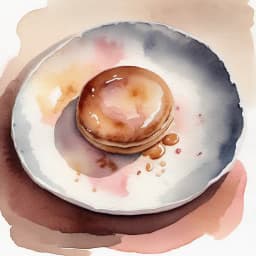
Beneath a coating of white sugar, soft gyuhi (sweet rice cake) peeks through. Upon entering your mouth, the Wasanbon sugar melts instantly, followed by the spreading aroma of chewy gyuhi and the elegant scent of the white adzuki bean paste inside.
It is crafted by Onoya, an established shop in Takaoka's Yamamachi district that has existed since 1838. This is a lovely, bite-sized mochi confection made by wrapping rare Bitchu white adzuki bean paste in gyuhi and coating it with Wasanbon sugar. The name is inspired by a poem written by the poet Otomo no Yakamochi about Mount Tateyama. Since the Meiji era, it has been passed down as the shop's signature confection.
Melting sugar, soft gyuhi, and the aroma of white adzuki beans. It is an elegant single morsel where all three elements harmonize.
Born in Takaoka, the home of Manyoshu, 'SECO (Seko)' is a Kohakuto (amber sugar) candy that is as translucent as a gemstone.
Its name originates from the Manyoshu collection. In that era, women would call their beloved 'Waga Seko' (my dear) while exchanging poems. This confectionery embodies the timeless feeling of longing for someone, captured within vibrant Kohakuto.
Produced by Shinohara, an established shop founded in the third year of the Tempo era, this candy-style treat comes in two flavors: Blue Curacao × Citron and Apricot × Milk. It is a masterpiece where Japanese tradition meets Western cuteness.
With a crunchy exterior and a soft interior, it is an adorable treat in both appearance and taste, making it a delightful accompaniment to tea, straight from Takaoka.
This is 'Takaoka Ramune,' a ginger-scented ramune candy created from the same wooden molds used to make rakugan (traditional Japanese sugar candy).
Produced by Oonoya, a long-established shop founded in the ninth year of the Tenpo era (1838). By utilizing heirloom wooden molds and meticulous traditional manufacturing methods passed down through generations, this ramune was brought to life in 2012. Each piece, named 'Takara-zukushi' (Assorted Treasures), is clearly engraved with auspicious symbols such as the magic mallet (Uchide no Kozuchi) and the sacred jewel (Hoju), and features the gentle aroma of domestic Japanese ginger.
This exquisite product from Toyama was even selected for the Ministry of Economy, Trade and Industry's 'The Wonder 500.'
Upon tasting, it offers a sweetness that gently melts in your mouth. With both its good fortune symbolism and adorable appearance, it is a highly cherished souvenir from Takaoka.
The gentle red and white colors are beautiful. This is 'Akebono,' a Japanese confection by Onoya.
Smoothly cooked smooth bean paste (koshi-an) is wrapped in soft gyuhi (sweet rice dough) coated with himochiko (dried mochi powder), then gently sandwiched between thin, crispy rice crackers. It is a delicate confection made through a labor-intensive process. The pale, soft colors resemble the sky at the break of dawn, making it perfectly suited to its name, 'Akebono' (Dawn). It is also a seasonal item, available only during the cold months of December and January.
Because of its short shelf life, you can enjoy the delicate flavor of it being freshly made. It is an elegant sweet that pairs beautifully with warm tea during a winter moment.
A signature confection from Takaoka's Onoya, derived from a poem by Otomo no Yakamochi. It is a bite-sized sweet consisting of Bitchu white adzuki bean paste wrapped in soft gyuhi (sweet rice cake) and dusted with Wasanbon sugar like fallen snow. It offers an elegant sweetness and melt-in-the-mouth texture passed down since Tenpo 9 (1838).
One of the Takaoka Ramune series from Onoya. Using traditional wooden molds, it captures the shape of seashells—which have been prized as 'treasures' since ancient times—and encloses the refreshing flavor of domestic yuzu. It is characterized by a light, melting texture created through the traditional Rakugan manufacturing process.
Ezunotsuki is a traditional confection from Takaoka that captures the very essence of a full moon reflected in the sea of Ariiso.
Since its creation by the third-generation confectioner during the Ansei era, it has been cherished alongside the long history of Takaoka. Thinly baked 'oboro senbei' (crispy rice crackers) made from Shin-Taisho glutinous rice are sandwiched with homemade white miso bean paste. The surface is drizzled with honey syrup designed to mimic gentle ripples, expressing the scene of a moon floating over swaying waves. Both its name and appearance embody elegance.
With the oboro senbei crumbling delicately in your mouth and the mellow sweetness of the white miso paste, this refined Toyama confection allows you to savor the scenery just by looking at it.
This is Onoya's 'Mooncake,' a reinterpretation of the baked pastry introduced from China, crafted in the Takaoka style.
Produced by Onoya, an established shop founded in the ninth year of the Tenpo era, the fragrant baked dough is filled with bean paste generously mixed with walnuts and sesame. The sweetness is kept subtle, resulting in a simple yet rich and deep flavor. The surface is aromatic, and when you take a bite, a moist texture spreads from within—the contrast makes it an enjoyable treat.
Since they are individually wrapped, they are perfect for small gifts. It is a nostalgic and approachable sweet that pairs well with both Japanese and Western styles.
Onoya's Takaoka Ramune is inspired by the Takaoka Okurayama Festival, a UNESCO Intangible Cultural Heritage. Using traditional wooden molds, it captures the decorations of the festival floats and the Maeda clan's umebachi (plum blossom) crest, finished with the fruity flavor of domestic Japanese apples. A box that allows you to feel the pride of Takaok.
Onoya's Takaoka Ramune expresses the four seasons of Japan—including cherry blossoms, plum blossoms, hydrangeas, morning glories, and bellflowers—using Rakugan wooden molds. The sweet and sour flavor of domestic Japanese strawberries, combined with its gorgeous appearance, makes it particularly popular as a gift for women.
A spring-limited item from Ohno-ya's Takaoka Ramune. Using delicate wooden molds to depict spring flowers and landscapes, it creates a seasonal feel with the gentle sweet and sour taste of domestic strawberries. A spring-like ramune candy perfect as a gift during the cherry blossom season.
Ramune candies handcrafted one by one using traditional Japanese confectionery wooden molds by Onoya, founded in 1838. Shaped like auspicious symbols such as the magic mallet (Uchide no Kozuchi) and the sacred jewel (Hoju), they feature a subtle hint of ginger aroma. A fusion of Takaoka's traditional craftsmanship and confectionery.
When thinking of Toyama in Etchu, one thinks of the medicinal pills with a 400-year history. Mimicking those pills known as 'Hanka-tan,' Mitoke (founded in 1949) created the baked manju 'Hanka-dan.' It features bite-sized pieces where flavorful dough infused with cocoa wraps around moist white bean paste. Its small size and elegant sweetness make it impossible to stop at just one. The box is also delightful, featuring a nostalgic paper balloon design that tickles the heart. This famous confection from Takaoka has even won the Prime Minister's Award. It is a product full of playfulness and warmth, perfect for tasting while feeling the history of the medicinal capital, Toyama. You can enjoy the unique story of Toyama along with its flavor. It is a must-buy confection when visiting Takaoka.
Fukutaya Kashipo was founded in Unazuki Onsen during the late Taisho era. Its representative confection, 'Omokage,' is elegantly crafted, reminiscent of the graceful peonies that scent the Kurobe Gorge.
Smooth smooth bean paste (koshian) is wrapped in gyuhi and gently sandwiched between thin, red and white monaka wafers. The brand mark pressed onto the wafer is the same one used since the company's founding. With a minimalist approach using only bean paste, gyuhi, and monaka wafers, this high-quality confection has even won the Prime Minister's Award.
With a single bite, an elegant sweetness and the chewy texture of gyuhi spread softly through the mouth. It is a quintessential Unazuki product that has long been loved as a standard souvenir after visiting the Unazuki hot springs. It is a reliable gift that will please people of all generations.
Fukutaya Kashipo has continued to make Japanese sweets in Unazuki Onsen since the late Taisho era. Alongside their signature confection 'Omokage,' 'Unazuki no Sato' is a widely beloved product.
Smooth smooth bean paste (koshi-an) is gently tucked inside moist dough. Its simple and elegant sweetness seems to reflect the very atmosphere of the hot spring town, providing a gentle companion for a break after a soak in the bath.
Upon opening the wrapper, a nostalgic Japanese aroma wafts out. It is a heartwarming souvenir you will want to bring home along with your memories of visiting Unazuki Onsen. This product, quintessential to Unazuki, is sure to delight family and friends. With every bite, the charm of Unazuki unfolds.
Produced by Fukutaya Kashipo in Unazuki Onsen, 'Koshiji no Tabimakura' is individually wrapped in perilla (shiso) leaves. The name was inspired by the image of a small gift placed by a traveler's pillow.
Smooth smooth bean paste (koshi-an) is encased in soft mochi (gyuhi) and gently wrapped in a shiso leaf. With a single bite, the refreshing aroma of shiso spreads softly, while a subtle saltiness enhances the sweetness of the bean paste. It is a confection that leaves a pleasant, refreshing aftertaste.
With a reliable flavor that has been recognized at the National Confectionery Expo, this elegant Japanese sweet is something you'll want to give as a gift to loved ones, along with memories of Unazuki Onsen. The scent of shiso gently envelops the lingering feelings of your journey. Each piece is imbued with careful, meticulous craftsmanship.
Spreading across a highland at an altitude of 355 meters is 'Kurobe Ranch Makiba no Kaze.' It is a ranch where approximately 250 cattle live freely amidst majestic views overlooking the Kurobe River alluvial fan and Toyama Bay.
This Baumkuchen, baked to highlight the flavor of that milk, features an attractive moist texture. You can enjoy a gentle taste, as if the nature of the ranch has been captured directly within it.
With every bite, the aroma of milk softly spreads, making you feel truly satisfied. This souvenir, which allows you to feel the rich nature of Kurobe, is perfect for sharing with the whole family. It is an item that becomes a wonderful memory of a fun day at the ranch. We hope you add this sweet to your memories of traveling through Kurobe.
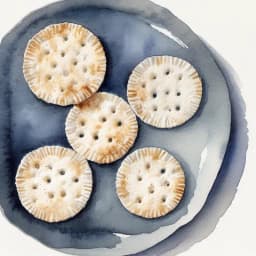
With a single crisp bite, the fragrant aroma of rice and the delicate scent of white shrimp waft through your nose. As you chew, the elegant umami of the shrimp gradually spreads, leaving a lingering impression alongside a light texture.
These are crafted by Hinodeya Seika, a company that has been operating in Nanto City, Toyama Prefecture, since 1924. These rice crackers are made using 100% Toyama-grown rice, kneaded with white shrimp that can only be caught in Toyama Bay, and then baked to perfection. Under the brand name "Sasara-ya," this snack combines the tradition of rice cracker making with the 'jewel of Toyama'—the white shrimp.
Perfect as a snack with tea or as a souvenir. The light, crispy texture and the savory aroma of white shrimp will make you reach for just one more.
A rice cracker called 'Hotaruika Kiko' that features whole firefly squid, signaling the arrival of spring in Toyama Bay.
Made with dough from the local 'Tentakaku' rice, the savory umami of the firefly squid permeates the cracker, spreading a rich aroma of the sea with every bite. Produced by Hinodeya Seika, a long-established confectioner famous for their white shrimp crackers, this snack captures another treasure of Toyama Bay in a fragrant cracker. It is a treat that allows you to enjoy a flavor typically only encountered in spring, all year round.
Perfect as an accompaniment to tea or as a snack with alcohol. This is Sasara-ya's pride, offering an easy way to savor the abundant blessings of Toyama Bay.
A luxurious kaki-mochi (rice cracker) made using white shrimp from Toyama Bay and locally grown glutinous rice, finished by hand-baking each piece.
White shrimp, known as the 'Jewels of Toyama Bay' due to their translucent pale pink color, are small and elegant shrimp. We have tightly packed the umami of these shrimp into a carefully baked, fragrant kaki-mochi. Because each piece is hand-baked, there are unevenly toasted spots that machine-baked crackers lack; this actually creates a more fragrant, rustic, and deep flavor.
When you bite down with a crisp crunch, the elegant flavor of the white shrimp rises beautifully. It is a snack unique to Toyuma that conveys the warmth found only in handmade craftsmanship.
A rice cracker baked into bite-sized koban (oval) shapes using plenty of white shrimp from Toyama Bay. The white shrimp are small, transparently beautiful shrimps known as the 'Jewels of Toyama Bay.' We have shaped them into round koban pieces so you can enjoy the flavor of Toyama's representative white shrimp cracker more casually. Baked fragrantly with rice grown in Toyama Prefecture, they come in convenient small bags that are easy to finish. They are also very useful as small gifts for distribution.
Perfect as a snack with tea or a light accompaniment to evening drinks. This is Sasara-ya's proud bite-sized snack that you won't be able to stop eating.
Kobukaki is a quintessential Toyama-style okaki (rice cracker) packed with the savory umami of kombu (kelp).
In fact, Toyama is one of Japan's leading 'Kombu Kingdoms' in terms of kelp expenditure. The food culture of kombu, brought here long ago by the Kitamaebune shipping vessels, remains deeply embedded in daily life today. This unique okaki from Toyama features dough made from Toyama-grown glutinous rice, generously kneaded with Hokkaido kombu powder, and baked to a crisp, fragrant perfection. It is a product that embodies the local food culture in its very form.
With every bite, the gentle yet deep umami of the kombu spreads through your palate. This pride of Toyama is a perfect accompaniment to both tea and alcohol.
Kaori Senmai is a thin-baked rice cracker made by Hinodeya Seika, crafted by rolling out Toyama-grown rice as thinly as possible.
With a crispy, light texture, the natural fragrant aroma of the rice rises beautifully. The seasoning is light and subtle, making it so delicious that you can't help but reach for one piece after another. Since it comes in individual small packets, it is easy to use as a small gift or to distribute at the workplace. It is an unpretentious companion for your everyday snack time.
Bite by bite, this simple cracker allows you to taste the pure deliciousness of Toyama rice exactly as it is, without anything extra added.
When you bite into it, a Daruma shape is revealed. 'Choco-tto Daruma' is a playful rice cracker.
Daruma-shaped arare (rice crackers) are completely coated in smooth chocolate. You can enjoy the alternating textures of the crispy, light Toyama-grown rice and the smooth, gentle sweetness of the chocolate with every bite. It is crafted by Hinodeya Seika, a long-established maker known for their white shrimp crackers. It is an adorable, winter-only seasonal item.
Perfect as a snack or a small gift, this fun Toyama souvenir is both visually charming and auspicious, guaranteed to bring a smile to your face.
The matcha version of Choco-tto Daruma. Daruma-shaped arare (rice crackers) are coated in Uji matcha chocolate, creating an exquisite harmony between the savory aroma of rice and the subtle bitterness of matcha. We also recommend comparing it with the chocolate flavor for enjoyment.
A product featuring kakimochi (rice crackers) baked with locally grown rice by Hinodeya Seika, coated in a mellow mayonnaise flavor. The sharp acidity and savory aroma of the rice leave a lasting impression, making it suitable as both a snack and an accompaniment to drinks. It is one of Sasara-ya's classic snack series.
A variation of Sasara-ya's popular White Shrimp Koban, featuring an accent of coarse black pepper. The elegant sweetness of the white shrimp is complemented by a spicy kick of black pepper, making this a sophisticated rice cracker perfect as an accompaniment to beer.
The flagship confection of Ishikawaya, a long-established shop in Imizu City spanning seven generations. It is a gyuhi mochi finished with a chewy and smooth texture by adding egg whites, gently enveloping white bean paste and syrup-soaked Taisho Kintoki beans.
It is said to have earned its name from its silky-smooth mouthfeel, much like silk. The soft texture of the mochi and the fluffy sweetness of the Kintoki beans harmonize elegantly.
This is a masterpiece that Toyama is proud of, having once been presented to the Emperor and Empress during the National Tree Planting Festival. It has also been highly evaluated in national confectionery competitions. This Japanese sweet, shining with seven generations of craftsmanship, is suitable as a gift for special occasions or as a treat for yourself. Please enjoy the taste of this long-established shop that Toyama takes pride in.
A famous confection from Etchu called 'Usurahi' (Thin Ice), which captures the scene of a thin layer of ice forming over rice paddies in early spring.
Since its founding in the second year of the Horeki era (1752), Goromaruya has continued to create this masterpiece. Ultra-thin layers of Shin-Taisho glutinous rice from Toyama are rolled out, and Awa Wasanbon sugar is carefully applied to each layer with a brush. Its delicate flavor gained fame early on, leading to it being presented to the Kaga Clan and even the Shogunate, earning long-standing affection. It is a confection made without sparing any effort, taking two full days of craftsmanship to complete.
Upon entering the mouth, it melts away silently and fleetingly. This pride of Toyama's dry confectionery (higashi) evokes even the cold, clear air of early spring.
Born from the early spring confection 'Usurahi,' the modern dry sweet 'T-Go' is a new masterpiece by Goromaruya, founded in 1757.
On an ultra-thin rice cracker made from Shin-Taisho glutinous rice from Toyama, Awa Wasanbon sugar is layered using traditional methods to express five flavors and colors: Cherry, Matcha, Yuzu, Wasanbon, and Sesame. In 2013, it was selected by the Japan Tourism Agency as an 'Ultimate Souvenir that can compete globally,' and the following year, it was chosen for the Ministry of Economy, Trade and Industry's 'The Wonder 500.'
An elegant confection that is a delight to both the eyes and the palate with its five colors and flavors. It is a gift from Toyama where long-protected tradition meets lighthearted playfulness.
Goromaruya's seasonal limited edition 'Usura-gori,' shaped like pale pink spring flower petals. A thin rice cracker made from Shin-Taisho rice is coated with Wasanbon sugar, adorned with the light color and fragrance of cherry blossoms. Its fleeting beauty, available only in early spring, makes it a highly appreciated gift.
A series of dry confectionery produced by Usuhyo Honpo Goromaruya. Using glutinous rice from Toyama and Wasanbon sugar, these sweets are finished with delicate designs themed around 'trees and forests.' They feature a modern appearance that offers a different charm from the traditional Usuhyo.
T5, the masterpiece of Goromaruya, is a five-colored dry confection born from Shin-Taisho rice and Wasanbon sugar. It concentrates five different tones and tastes—Sakura, Matcha, Yuzu, Wasanbon, and Sesame—into a single thin piece. This exquisite Toyama specialty was also selected for the Ministry of Economy, Trade and Industry's 'Wonder 500'.
Usurahi Honpo Goromaruya is a long-established shop in Oyabe that has been making Japanese sweets for over 260 years since its founding in 1757. 'Monaka Florentine' is the result of where this long tradition meets a sense of playfulness.
Using 'Shin-Taisho Mochi,' a glutinous rice from the Hokuriku region, we create a fragrant and crispy monaka shell, paired with caramel made from Okinawan black sugar. We then coat it with almonds and pecan nuts for a perfectly toasted finish.
The harmony between the crunchy monaka and the moderately sweet caramel creates an irresistible, light texture. This confection, where Japanese and Western styles blend beautifully, is perfect with coffee or tea. As a gift, it is sure to be a great conversation starter.
A modern take on 'Usura-ko' (thin ice) by Goromaruya, founded in the second year of the Horeki era. Using Maruhachi Seicha's premium Kaga Bocha (roasted green tea), the deep aroma of roasted tea overlaps with the sweetness of Wasanbon sugar. This is a rare item available only at the store.
A black tea flavored version of Goromaruya's 'Usurai' (thin ice), given a modern arrangement. The brilliant aroma of the tea leaves blends with the gentle sweetness of Wasanbon sugar; it is part of the series selected by the Japan Tourism Agency as one of the "Ultimate Souvenirs that can compete globally."
A flagship product of Okashikura, made by kneading white shrimp from Toyama Bay into glutinous rice sourced from contract farmers in the Tonami Plain, and baked using traditional methods. A single piece where the sweetness of rice grown by the snowmelt of the Northern Alps overlaps with the flavor of white shrimp.
A single thin cracker baked with whole sweet shrimp caught in Toyama Bay kneaded directly into the dough. Its name is 'Ebi-koishi' (Longing for Shrimp). The maker is Hinodeya Seika, a long-established confectionery well-known for its white shrimp crackers. While sharing the same Toyama Bay origin as white shrimp, this version offers a different profile: a rich and mellow umami unique to sweet shrimp that spreads throughout the mouth. It is finished as an incredibly luxurious cracker where the flavor of sweet shrimp is concentrated within a crispy, light texture. A single piece provides a satisfying taste.
An irresistible, deep, and intense flavor for shrimp lovers. This is Sasara-ya's proud, luxurious creation that allows you to enjoy the full bounty of spring from Toyama Bay.
“Shiroebi Kiko” is a thin, crispy rice cracker baked to perfection using Toyama Prefecture-grown rice and the precious white shrimp known as the “Jewel of Toyama Bay.”
White shrimp are small crustaceans unique to Toyama Bay, often compared to jewels due to their translucent, pale pink appearance. Hinodeya Seika has captured their elegant and gentle umami within these light, crispy crackers. Using only “Tentakaku” rice grown in Toyama Prefecture, we carefully bake each piece with just the right amount of salt to enhance the shrimp's natural flavor.
With a crisp, light texture and a delicate aroma of white shrimp, you'll find yourself reaching for more piece after piece. It is a quintessential souvenir representing Toyama.
"Kokiriko-bushi" is an ancient folk song passed down in Gokayama, Nanto City. "Sasara-ya Kokiriko" is produced by Hinodeya Seika, founded in 1924, and takes its name from the "sasara," an instrument used in that dance.
We carefully pound Toyama-grown glutinous rice with a mallet before baking it and seasoning it with fragrant soy sauce and seaweed. This snack features a pleasant, light crispness reminiscent of the clicking sound made by the sasara.
While simple, it offers a robust rice flavor that pairs perfectly with both tea and alcohol. It is an okaki (rice cracker) that invites you to savor each piece slowly while reflecting on Toyama's traditional performing arts. It will add a touch of richness to your tea time.
A premium version of the standard white shrimp crackers, using more than twice the amount of white shrimp and baked into an even thinner dough. This is Sasara-ya's highest-grade product, where the elegant aroma of white shrimp bursts at the moment of a crispy snap.
Toyama flourished greatly during the Edo period through the trade of Kitamaebune ships. Named in honor of this history, 'Kitamae Yakimochi' is crafted by Hinodeya Seika, a company dedicated solely to rice cracker making.
We slowly bake glutinous rice from Toyama Prefecture and coat it with the savory aroma of soy sauce. It offers a simple, rustic flavor with a chewy texture reminiscent of grilled mochi.
As you chew, the umami of the rice and the fragrance of the soy sauce spread, evoking a sense of nostalgia. This is a delightful snack for daily enjoyment, pairing perfectly with tea or as an accompaniment to drinks. It is an okaki (rice cracker) you can enjoy while reflecting on the history of Toyama's maritime trade. One bag is enough for the whole family to enjoy.
Produced by Hinodeya Seika's 'Sasara-ya,' a company dedicated solely to rice cracker making, these are large, substantial rice crackers slow-baked using non-glutinous rice from Toyama Prefecture.
As the name suggests—meaning 'so satisfying even an ogre would enjoy it'—they feature a crunchy, firm texture and a rich soy sauce flavor. The more you chew, the more the savory umami and toasted aroma of the rice spread throughout your mouth.
Every cracker is packed with a commitment to traditional manufacturing methods and carefully selected domestic ingredients. Because they are highly satisfying, they are perfect both as a snack with tea or as an accompaniment to alcohol. This is an authentic Toyama souvenir that hard-baked rice cracker lovers will find irresistible. You can fully experience the robust power of Toyama's rice.
An okaki (rice cracker) made by 'Sasara-ya' of Hinodeya Seika, a company dedicated solely to rice cracker making. It is crafted by shaping Toyama-grown glutinous rice into rounds and baking them. This item is adorable with its simple, round shape, fitting for the name 'Taromaru.'
The flavor, wrapped in the savory aroma of soy sauce, is somewhat nostalgic and provides a comforting deliciousness. The chewy texture and the umami of the rice spread gently with every chew.
Each piece is packed with a commitment to traditional manufacturing methods and carefully selected domestic ingredients. It pairs widely with both tea and alcohol, making it useful for daily snacking. This okaki allows you to easily enjoy the deliciousness of Toyama rice. Its simple, characteristic Toyama charm never grows old.
Produced by Hinodeya Seika's "Sasara-ya," a company dedicated to rice cracker making, this is an autumn/winter limited edition item featuring 100% Toyama-grown rice soy sauce crackers coated in strawberry chocolate.
The moderate saltiness of the crunchy rice cracker meets the sweet and sour strawberry chocolate. While it may seem like an unexpected combination at first glance, once you take a bite, the saltiness and sweetness resonate exquisitely. It is a fresh deliciousness where Japanese and Western flavors meet.
It is perfect not only with green tea but also with coffee or tea. Because it is an enjoyment reserved for the cold season, you will find yourself wanting to pick it up whenever you see it. It adds color to a slightly luxurious snack time. Since it is seasonal, you are lucky if you encounter it.
Created by Hinodeya Seika, a company dedicated solely to rice cracker making, 'Sasara-ya' features rice from Toyama Prefecture shaped into small, round pieces and assorted with various flavors such as shrimp and seaweed. The colorful, bite-sized grains brighten even just looking at them during tea time. It is a delightful experience to compare each grain, enjoying the varying aromas and textures depending on the flavor.
With a light, crunchy texture and a gentle umami from the rice, it spreads comfortably across the palate. This assortment is perfect not only as a snack for home but also as a delightful small gift. One box allows you to enjoy various delicious aspects of Toyama's rice crackers. It is a visually cute and fun box to give as a present.
A set of arare and senbei (rice crackers) from Hinodeya Seika's 'Sasara-ya,' a company dedicated to the craft of rice cracker making. This set features a variety of flavors including shrimp, sesame, seaweed, and kombu.
Since you can enjoy many different flavors in one box, there is the joy of wondering "which one should I pick next?" every time you open it. The fragrant aroma that changes with each ingredient and the gentle umami of the rice spread pleasantly through the palate.
The crunchy, light texture makes it perfect both as a snack with tea or as an accompaniment to drinks. Its versatility makes it suitable for both gifts and personal enjoyment. This is a classic souvenir that allows you to taste the full deliciousness of Toyama's rice crackers in a single box. It is a reliable choice when you are unsure what to pick.
The long-established Himi shop 'Ginnan-mochi Honpo Ogaya' was founded in 1872, inspired by the creation of sweets using the fruit of a giant ginkgo tree over a thousand years old. Their signature ginnan-mochi (ginkgo rice cake) is made by carefully peeling each individual ginkgo nut and kneading them into soft gyuhi mochi.
Upon opening the wrapper, a subtle scent of ginkgo wafts from the jade-colored mochi, with a gentle sweetness spreading with every bite. Himi is a land deeply connected to the Manyoshu; Otomo no Yakamochi stayed here during the Nara period while serving as the provincial governor. Each individual wrapper is accompanied by a Manyoshu waka poem composed in Toyama.
With the elegant taste of the mochi and the lingering historical resonance within the poems, it is a quintessential Toyama confection that satisfies the soul.
When you bite into the soft, round dough, smooth custard cream flows out from within. Konkon-tan is a famous Toyama confection where the moist, gentle dough and mellow cream melt together into one in your mouth.
It is crafted by Rebrand, a specialty sweets shop in Toyama. This steamed confection boasts finely textured dough made using a unique steaming method and carefully cooked custard cream. The name was inspired by 'Hankontan,' a famous medicinal pill that Toyama takes pride in. It has received numerous accolades, including a gold medal at the National Confectionery Expo.
A sweetness that pairs beautifully with both tea and black coffee. With just one bite, the soft dough and cream quietly dissolve on your palate.
When you take a bite of this pale cream-colored square piece, it crumbles delicately and melts away. All that remains is the soft, elegant sweetness of Wasanbon sugar—this is Tsukisekai, a representative confection of Toyama.
It was created by Tsukisekai Honpo. Since its founding in 1897, they have continued to uphold a method of combining fresh eggs with Wasanbon and Shirosan sugar, simmering them into syrup, and carefully drying them. It is a melt-in-your-mouth dry confection that also includes agar. It is said that the name comes from its appearance, which resembles the faint moonlight floating in the dawn sky.
Its light sweetness pairs well with both Japanese tea and black coffee. It is a beloved Toyama souvenir that has been cherished across generations.
Fluffy and chewy. When picked up with your fingers, it is so soft it feels fragile, and when placed in your mouth, it dissolves like light snow. Within its marshmallow-like light texture, a single piece of honey-soaked Kintoki bean emerges with sweetness—this is the Toyama specialty, Kanoko-mochi.
It is produced by Fuwa Fukujudo. They use Shin-Taisho glutinous rice, a brand rice from Toyama Prefecture, grinding it in a mortar daily and kneading it thoroughly. The accent piece, the Kintoki bean, is a masterpiece that takes 3 to 4 days to fully absorb the syrup to its core. It is said to have been conceived to evoke the whiteness of the snow on the Tateyama mountain range.
Despite being chewy, it has a clean bite, and the elegant sweetness vanishes smoothly. It is a treat you want to savor slowly along with tea.
These sablés are shaped like petals, directly mimicking the tulip, the official flower of Toyama Prefecture. It is a truly local specialty, reflecting Toyama's status as Japan's top producer of tulip bulbs. The cookies feature a light, crisp texture with a gentle sweetness from egg and butter that spreads softly in your mouth. The adorable packaging, decorated with colorful tulips, is also highly regarded; it is a visually stunning confection created by Fleur Rebrand, a sweet shop in Toyama. Since each piece is individually wrapped, they are also very convenient for sharing.
With an adorable shape that instantly says "I went to Toyama," these are the perfect casual and elegant gift, as if delivering a touch of spring warmth.
The rounded shape of the pear is truly adorable. This is Takimido's signature confection, 'Kureha-nashi Monaka.'
Kureha in Toyama City is known as a famous production area for sweet and juicy Kureha pears. Founded in 1964 in that very region, Takimido luxuriously fills pear-shaped monaka shells with two types of bean paste: a chunky Dainagon adzuki bean paste and a white bean paste infused with Kureha pear flesh. This is a high-quality Japanese sweet that has received numerous awards at the National Confectionery Expo.
An exquisite harmony created by the fragrant, crispy monaka shell and two different types of bean paste. It is a treat with a gentle sweetness that brings to mind the scenery of the Kureha pear orchards.
A mochi confection with a smooth and soft texture, much like 'Habutae' silk fabric.
The dough, made by kneading mochi flour with sugar and starch syrup and steaming it finely, melts softly in your mouth. The name is derived from Habutae, a supple and high-quality silk fabric. While originally known as a famous confection from Fukui, it has long been beloved in Toyama and is now a standard souvenir available at Toyama Station and Hokuriku Expressway service areas. It is an easy-to-purchase item that anyone would be happy to receive.
With its elegant, subtle sweetness and melting texture, it is a gentle Japanese sweet loved by all generations.
An adorable milk manju shaped like a willow basket. This is the 'Etchu Toyama Medicine Seller.'
When thinking of Toyama, one cannot forget the presence of the 'Medicine Sellers' who traveled across the country to support household medicine chests. This sweet was created by Rebran, inspired by that history and culture. The soft, moist dough mimics the willow basket carried on the medicine seller's back, enveloping a gentle roasted soybean flour (kinako) filling. The kinako, which contains soy isoflavones, adds a fluffy, rustic sweetness.
With one bite, you can softly touch upon the nostalgic stories of life in Toyama. It is a cute manju unique to Toyama.
Part of the popular 'Koibito' series spread across the country, this is the Toyama version: 'Toyama no Koibito.'
Light and crispy Langue de Chat sandwiches a mellow white chocolate. The wrapper features an adorable message in Toyama dialect, 'Suki de narancha' (I love you), and the package, depicting the ptarmigan and the Gassho-zukuri houses of Gokayama, tickles the travel bug just by holding it. It is a fun sweet that feels as if it has tightly enclosed the landscapes unique to Toyama.
With a light, crispy texture and gentle sweetness, it is delightful both to look at and to eat—a heart-warming souvenir filled with the essence of Toyama.
A chocolate version of Rebran's 'Medicine Seller' series. It features dark chocolate filling containing cacao polyphenols, encased in fabric shaped like a traditional willow basket. In contrast to the plain kinako (roasted soybean flour) filling, it offers a fragrant, bitter flavor that pairs perfectly with coffee.
A cookie reflecting the steep yet beautiful mountain profile of Mount Tsurugi in the Northern Alps. This is Rebran's famous confection, 'Tsurugi.'
Its hallmark is a strong, crunchy texture, reminiscent of stepping firmly through frozen snow on a mountain. We have sandwiched smooth white cream between fragrant dough that has been intentionally baked firm. The aromatic flavor of almonds adds even more depth to the taste. This ambitious creation attempts to capture both the severity and beauty of this famous peak in a single confection.
It features an exquisite balance of sweetness and toastiness. A powerful confection characteristic of Toyama, evoking the dignified presence of the famous Mount Tsurugi.
A somewhat unique yokan (sweet bean jelly) inspired by the 'Centrum' tram that circles through the streets of Toyama. The maker is Suzuki-tei, an established shop founded in Keio 2 (1866). This yokan was released to coincide with the opening of the Centrum tram service around central Toyama City. It features three varieties—Mokume Yokan, Brown Sugar, and Sesame—packed in a stylish box shaped like the monotone tram cars. The Mokume Yokan is a beautiful creation unique to Suzuki-tei, reflecting the annual rings of the Tateyama Cedar, the prefectural tree of Toyama. With a playful spirit that appeals to both railway enthusiasts and lovers of Japanese sweets, it is a fun-to-see and delicious-to-eat souvenir packed with the essence of Toyama.
A round and adorable milk manju (steamed bun) shaped like the ptarmigan, the prefectural bird of Toyama. The maker is Rebran, a long-established sweet shop beloved in Toyama for many years. A fine, moist dough gently envelops smooth milk bean paste. Its popularity stems from its round shape, inspired by the ptarmigan, which has been cherished since ancient times as a 'messenger of the gods.' Its gentle appearance is sure to bring a smile to your face. With a subtle, mild sweetness and an elegant, airy melt-in-the-mouth texture, this is a long-standing classic that consistently ranks high in the souvenir sections of Toyama Station.
Produced by Takumido, located in the home of Kureha pears, 'Nashi no Miyabi' is a Japanese confection that elegantly captures the flavor of pear.
Kureha in Toyama City is one of Toyama's leading production areas, known for its sweet and juicy Kosui pears. Using high-quality Wasanbon sugar, Takumido has crafted delicate sweets shaped like pears, reflecting the soft flavor characteristic of Kureha pears. This item is designed so that its rich flavor can be enjoyed regardless of the pear season. It is one of the shop's representative popular sweets, alongside their signature 'Kureha Pear Monaka'.
Upon tasting, the elegant sweetness of the Wasanbon sugar gently melts in your mouth. It is a confection that allows you to quietly and moistly savor the blessings of the pear village.
A monaka made by Takumido using Kosui pears, a specialty of Kureha, Toyama City. The pear-shaped wafer is filled with two types of bean paste—tsubuan (chunky red bean paste) and white bean paste containing pear pulp—allowing the sweetness and juiciness of the fruit to spread in your mouth. It has received awards at the National Confectionery Expo for many years.
A specialty shop that has preserved this single item since its founding in 1960. Pure white mochi, made from Toyama-grown glutinous rice grown with snowmelt from Mount Tate and egg whites, is decorated with kidney beans (Kintoki beans) that have been simmered in syrup for three days in a Kanoko (fawn spot) pattern.
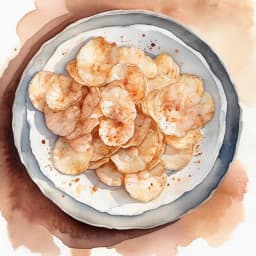
The rare white shrimp, which can only be commercially caught in Toyama Bay, are known as the "Jewels of Toyama Bay" due to their translucent, shimmering appearance. These local potato chips are coated with white shrimp powder.
Upon the first bite, you will experience a light saltiness, followed by the elegant sweetness and umami of the white shrimp spreading through your mouth. The crispy lightness of the potato and the aroma of the sea pair surprisingly well, creating a deliciousness that makes it impossible to stop eating once you start.
Since they can be easily purchased at shops in Toyama Station or the airport, they are perfect as a souvenir or a way to conclude your trip. This bag allows you to enjoy the blessings of the Toyama sea as a casual snack.
Founded in 1889, Fuwa Fukujudo has been beloved for its dedication to 'Kanoko Mochi,' inspired by the pure white snow of the Tateyama Mountain Range and the softness of Kaga Ujinie silk. This gift set features their signature confectionery alongside seasonal upper-class sweets (jo-namagashi) and baked goods.
Inside the Kanoko Mochi, which melts in your mouth like light snow, honey-soaked kintoki beans are hidden as an accent. Upon opening the box, colorful sweets reflecting the four seasons of Toyama peek out, brightening your heart just by looking at them.
Perfect as a souvenir for loved ones or a small treat for yourself. This assortment allows you to savor the craftsmanship of a long-established Toyama shop and the colors of the seasons all in one box. It is a heartfelt selection that makes you imagine the smiles of those you gift it to.
Due to Toyama's long history of thriving in the pharmaceutical industry, the region has continuously improved its quality as a producer of figs. Osawano, in particular, is a famous village for figs. Established in 1936, Isonoya Kashipo continues to create confections that utilize these local specialties.
Their signature 'Ichijiku Mochi' features fig paste wrapped in soft, moist Habutae mochi. The combination of the fruit's slightly crunchy texture and elegant sweetness creates a beautiful contrast between the white mochi and the red filling.
It offers a gentle flavor unique to Toyama that has been cherished locally for a long time. This Japanese sweet is a perfect companion for tea time. As a souvenir, it is sure to convey the essence of Toyama.
Founded in 1951, Sasaki Chitosedo is a long-established shop in Toyama City that insists on handmade production without any preservatives or additives. Known for its signature confection 'Mikasa-yama,' the baked sweet 'Tateyama Renzan' showcases their masterful skill.
As the name suggests, it is crafted to evoke the ridgeline of the majestic Tateyama mountain range. The shop's philosophy of bringing out the natural flavor of ingredients is gently conveyed with every bite.
This simple, handmade taste has been loved across generations. It remains a classic choice as a souvenir from Toyama City. This is a treat you will want to savor while imagining the mountain range of Tateyama. A reliable choice for both gifts and personal enjoyment.
Seishindo in Toyama City is a highly skilled Japanese confectionery shop that won the Honorary President's Award and Gold Medal at the National Confectionery Expo for its 'Light Rail Monaka,' which is shaped like the city's tram. This product, 'Koshi no Hana,' embodies that same craftsmanship.
It is a delicately crafted baked sweet inspired by the flowers of Toyama. Featuring a fragrant dough made with glutinous rice from Toyama Prefecture paired with sweet bean paste, it is finished with an elegant flavor that carefully brings out the essence of its ingredients.
With its visual beauty and a reliable deliciousness that conveys careful handiwork, this is a quintessential Toyama confection suitable for gifts that will brighten your tea time. It is a must-have item to commemorate your visit to Toyama.
A steamed confection by Rebran, inspired by the medicinal pills of Toyama, the city of medicine. It features melting custard cream inside a fine-textured, moist batter. An accomplished product that has won the Japan Food Selection Grand Prix.
Born in the Yao region during the Taisho era, "Tama-fuumi" is a famous confection created by Mr. Sakuzo Yanagisawa. It is made by whipping fresh local egg whites, setting them with natural agar, and then brushing the top with egg yolk before baking.
While it looks like an omelet, a surprising sensation awaits you with the first bite. The inside is as light and airy as freshly fallen snow, melting away on your tongue. Its simplicity lies in using only eggs, sugar, and agar.
Handcrafted one by one since the Taisho era, it is one of Toyama's representative confections. With its gentle sweetness and mysterious texture, it is a treat you will instinctively want to share with others. It is an unforgettable, prideful sweet of Toyama.
"Fuyaman" is a fusion Japanese-Western confection produced by Rebran, a specialty sweet shop in Toyama. It features "Sarashi-an" (red bean paste that has been repeatedly rinsed in water to remove impurities) wrapped in flavorful pastry dough and slow-baked in a kiln.
The bean paste, prepared with a unique method, offers an elegant taste that preserves the natural, fragrant aroma of the adzuki beans. The contrast with the crispy pastry is superb.
A high-caliber sweet that won a gold medal at the National Confectionery Expo, it is one of Toyama's famous sweets alongside Rebran's "Amakin-tan." This is a gift that will please anyone, harmonizing Japanese bean paste with Western pastry. We recommend it with confidence as a representative confection of Toyama.
Founded in 1866, Suzukitei's first generation created the 'Mokume Yokan'—the only one of its kind in Japan with a patented manufacturing process—by mimicking the annual rings of the Tateyama Cedar, the prefectural tree of Toyama. This set contains three mini-sized portions of that very Mokume Yokan. No matter where you slice it, beautiful wood-grain patterns appear, changing expression with every cut. It features a soft texture and elegant sweetness, inheriting the tradition of Edo-style Neriyokan. Because the name implies 'carving annual rings,' it has been cherished as a gift for both celebrations and condolences. Passed down through six generations, it is truly an art piece from Toyama. This is a product where you can savor the craftsman's skill alongside a cup of tea. A masterpiece suitable for gifting, breathing with the traditions of Toyama.
This is a 'Local Pocky' released by Glico exclusively in the Hokuriku region. It is generously infused with powder from Gorojima Kintoki, a traditional vegetable grown in the sand dunes of Kanazawa City, Ishikawa Prefecture. The natural, gentle sweetness unique to sweet potatoes spreads softly with every bite of the stick. Its fluffy flavor is so delicious it will make you smile. Utilizing local agricultural products, it offers a taste unique to the region. It is also wonderful because it can be easily shared along with stories of your travels through Hokuriku. You can enjoy a box that is distinctly different from regular Pocky. Please try it as a new standard for Toyama souvenirs.
Produced by Rebran, a specialty sweet shop in Toyama, 'Imoutomi' is a Japanese-Western fusion sweet potato confection. It features the 'Beni Azuma' sweet potato, which is first roasted, then turned into a paste and baked in pastry with cheese.
It offers a unique deliciousness where the rich sweetness characteristic of roasted sweet potatoes meets the richness of cheese and the crispiness of the pastry. While it feels like a Japanese wagashi, it also has the qualities of a Western confectionery.
The unique name, which plays on 'Imo' (potato) and 'Tomi' (from Toyama), is full of charm. Standing alongside Rebran's other famous confections, 'Kankintan' and 'Tomiyama', it is a Toyama souvenir that makes you want to share the story with others. The unique name itself will surely spark conversation.
Happy Turn in Kaga Bocha flavor, available only in the Hokuriku region. This item infuses a familiar classic snack with a local aroma.
Kaga Bocha is a type of roasted green tea that has been loved in Ishikawa Prefecture since ancient times. While general roasted green tea roasts the tea leaves, the major feature of Kaga Boquette is the fragrant roasting of the stems. Kameda Seika has captured that elegant aroma within their signature 'Happy Powder,' and the package is adorned with plum blossoms and the popular 'Turn Prince.' It is packed with the essence of Hokuriku.
Amidst the sweet and salty taste, the aroma of Bocha tea rises softly. It has become a complete staple as a souvenir for trips to Hokuriku.
Calbee's 'Jagarico,' available exclusively in the Sea of Japan area, has arrived with a flavor characteristic of Toyama: crab dashi. Infused with the crab stock that colors the winters of Hokuriku, it features an elegant umami within a light saltiness.
Even more delightful is the inclusion of a dip sauce containing real crab meat. When generously coated onto the sticks, a rich crab flavor instantly spreads throughout your mouth.
You can enjoy them crunchy as they are, or indulge in the luxury of the dip. The charm lies in being able to enjoy them in two different ways. This snack is perfect for travel treats or souvenirs, offering an easy way to taste the seafood of Hokuriku. It is a satisfying taste of Toyama in a single bag.
These crackers are made by kneading over 60% white shrimp, which inhabit the deep waters of Toyama Bay, into the dough. Because the shrimp shells are used whole, the aroma is particularly prominent, and the texture is light and crispy. Individually wrapped, making them convenient for sharing as souvenirs at the workplace.
These are additive-free rice crackers simply baked with salt and soy sauce, using only rice grown in Toyama Prefecture as the raw material. Hinodeya Seika, a company dedicated solely to rice cracker making, has utilized the natural flavor of the ingredients without adding unnecessary extras.
As the name suggests, it has a gentle flavor where the natural sweetness of the rice spreads slowly. The aroma and seasoning are subtle, allowing you to taste the deliciousness of the rice itself with every bite.
With a light, crispy texture, it can be enjoyed safely by everyone from small children to the elderly. It is also a great choice for those looking to limit their salt intake. This Toyama cracker is a perfect companion for your daily tea time, with the quality of the ingredients evident in every single piece.
Kameda no Kaki no Tane is a series released by Kameda Seika exclusively for the Hokuriku area. The coating of these crackers is dusted with powder from rare white shrimp, which can only be caught in Toyama Bay.
The familiar savory taste of Kaki no Tane is layered with the elegant sweetness of white shrimp. The spiciness is kept mild, resulting in a sophisticated flavor that highlights the aroma of the sea. It is light and easy to snack on.
It pairs perfectly with beer or sake, and since they are individually wrapped, you can enjoy them bit by bit. Because it allows you to easily take home a taste unique to Toyama, this bag is also very useful as a small gift for others. It is a must-have addition to your selection of snacks to accompany alcohol. Please consider adding this to your collection of Toyama souvenirs.
Glico's rice flour snack "Wagokoro Pretz" has arrived in a special Yaki Onigiri (grilled rice ball) flavor, exclusive to the Niigata and Hokuriku regions. Using Koshihikari rice grown in Niigata Prefecture, it is roasted to perfection to bring out the delicious flavor of the rice.
It features a crunchy texture similar to okaki (rice crackers), with the fragrant aroma of soy sauce characteristic of grilled rice balls wafting through. The savory aroma expands with every bite, making it hard to stop at just one.
With multiple small boxes included, it is perfect as a small gift to distribute. It is an item you can enjoy casually along with stories of your visit to Hokuriku. Its deliciousness is something everyone, from children to adults, will want to share. The fact that it is easy to take home is also a great plus.
The Tateyama Kurobe Alpine Route pierces through the magnificent nature of the Northern Alps. These baked cookies, featuring the Tateyama mountain range on their packaging, were created to embody the memories of that journey.
The buttery, crispy dough spreads a fragrant aroma with every bite. Because the flavor is simple, it never becomes tiring and pairs perfectly with coffee or tea.
Since they are individually wrapped, they are easy to distribute and useful as souvenirs for colleagues or friends. This box, which has been loved as a staple of mountain tourism, is perfect as a memento of a trip to Tateyama Kurobe. It is a sweet you can enjoy slowly while remembering the majestic mountain range. You can savor the afterglow of your travels right at home.
Made using glutinous rice from Toyama Prefecture, this mochi confection is named 'Ie' (Home), symbolizing family togetherness. The name embodies a warm atmosphere, much like a dining table surrounded by family. Its charm lies in its simple sweetness and soft mochi texture. One bite spreads a nostalgic flavor that brings a sense of relief. Because of its unpretentious deliciousness, it naturally fits into your daily snacking routine. This is a warm confection perfect as a gift for loved ones. It makes you want to brew some tea and savor it slowly with family or friends. It is a heart-soothing item packed with the gentleness of Toyama's rice. The perfect mochi sweet for when you want to take a relaxing break.
Nestlé's 'KitKat Mini Onsen Manju flavor' is released exclusively at hot spring resorts nationwide. The outer chocolate is finished in a light brownish color reminiscent of manju (steamed buns), and the wafer inside is sandwiched with cream containing red bean powder.
With one bite, a gentle red bean flavor reminiscent of onsen manju wafts through. It is a comforting taste, perfect for a relaxing break after a soak in the hot springs.
In Toyama, it can be found in places like Unazuki Onsen, and the collaboration package with the popular 'Neko Hyakkei' (100 Views of Cats) is eye-catching. The individual wrappers also feature playful designs, making them great for sharing. This is a sweet you will want to pair with your travel memories. Please enjoy it alongside your tour of Toyama's hot springs.
Fujiya released 'Country Ma'am Anko Mochi flavor' exclusively in the Hokuriku area. This product was created in collaboration with 'Enpachi,' a long-established Japanese confectionery shop in Ishikawa Prefecture.
The familiar moist dough has carefully kneaded smooth red bean paste (koshian) incorporated into it. With one bite, the subtle aroma of adzuki beans spreads, offering an elegant taste reminiscent of Enpachi's anko mochi. The packaging, which evokes bamboo leaf wrapping, also stirs a sense of travel nostalgia.
The charm lies in being able to enjoy a Japanese flavor characteristic of Hokuriku with the convenience of a Western-style snack. It is a box you will want to share casually along with stories of your travels through Toyama, Ishikawa, and Fukui. A product you'll want to pick up as a souvenir of your trip to Hokuriku.
These cookies are exclusive to highway service areas and feature prints of NEXCO Central Japan's PR character, 'Michimaru-kun.' Michimaru-kun is an energetic boy dog who loves going on outings.
The adorable character depicted on the buttery, crispy cookies enhances the feeling of travel just by looking at them. Since they are individually wrapped, they are easy to distribute and perfect as a souvenir from a drive.
These sweets can be found at service areas along the Hokuriku Expressway and serve as a wonderful memento of your trip. They are also ideal as a treat for children during a break on long drives. This box allows you to take the memories of your highway journey home with you.